In 2022, the “Human Immunome AI Summit” was convened to bring together over 60 leading biomedical and AI scientists to consider the possibility that scientific and medical advances had reached a stage where we could conceivably build predictive and mechanistic models of the immune system. Their questions were, Can we do this, and if so then how? And who should lead the charge?
The Human Immunome Project
Reaching consensus that a new initiative was needed, Co-Chief Science Officers John Tsang, PhD from Yale and Shai Shen-Orr, PhD, from The Technion, whose strategic vision was sketched out at the La Jolla symposium, began working with Board Chair Jane Metcalfe to form the Human Immunome Project and translate their shared vision into an achievable program. Hans Keirstead, PhD was recruited to assume leadership as interim Chief Executive Officer of HIP. Together, they articulated a global study protocol and scaling strategy to generate the world’s largest and most comprehensive immunological dataset and build publicly available AI models of the immune system. Development of a Scientific Strategy to outline how we could most effectively decode and model the immune system marked the next phase of the organization.
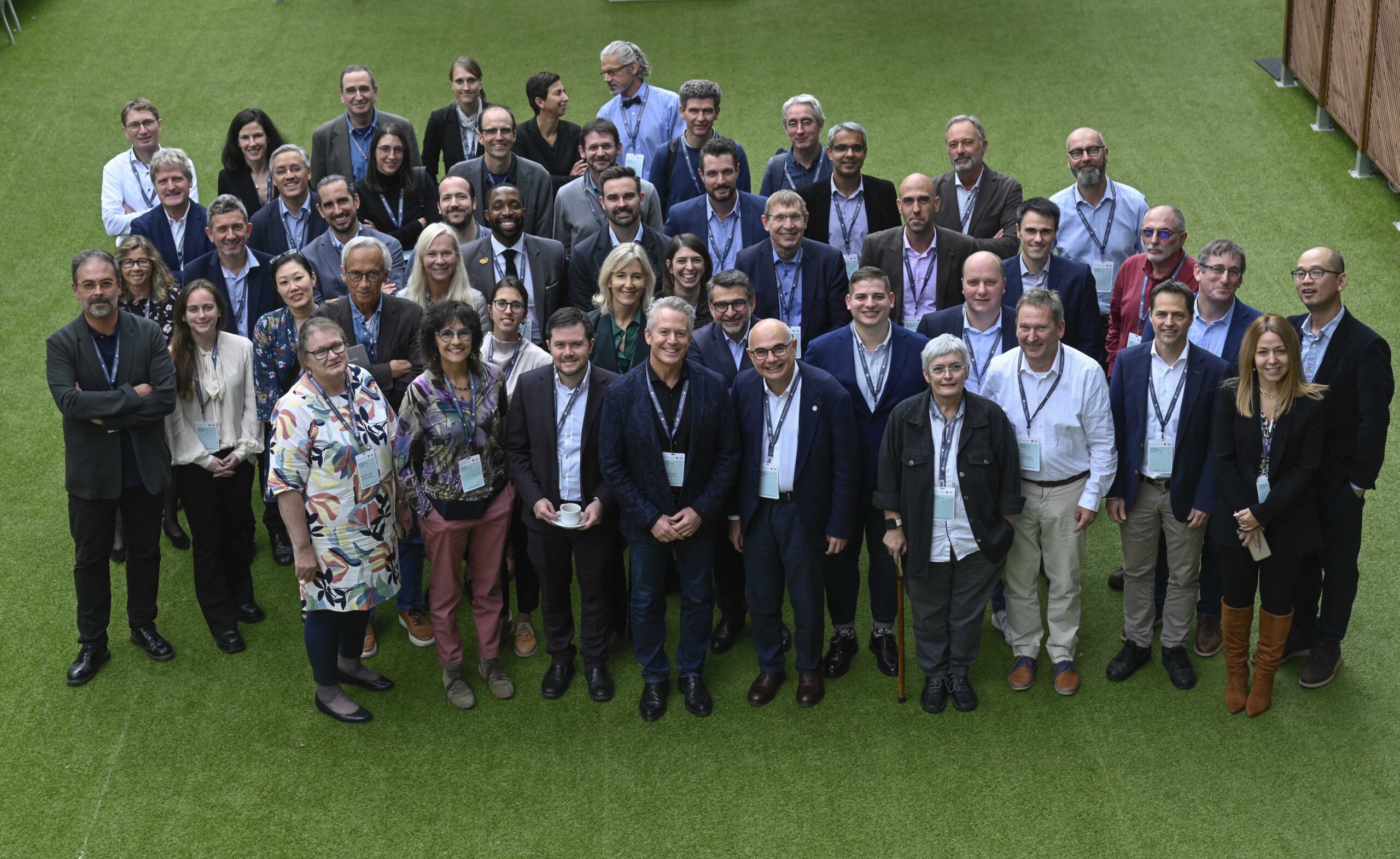
Presentation of HIP’s Research Plan at La Caixa Foundation, November 2023
Scientific Partner Network
In 2025, Board Chair Jane Metcalfe assumed leadership of the organization as Executive Chair. In September of that year, Jane, John, and Shai announced the launch of the Scientific Partner Network, marking the largest collaboration in the history of systems immunology. With researchers representing 10 world-leading institutions across 5 continents, the Scientific Partner Network brings the world’s foremost computational systems immunologists together to further refine the scientific strategy, the core assays, a common study protocol, guidelines for participant engagement, as well as data storage and governance planning.
In November of 2025, the prestigious Banbury Center at Cold Spring Harbor Labs welcomed members of the Scientific Partner Network for HIP’s first in-person gathering, much as they had welcomed the Human Genome Project planners decades earlier. For insights into the significance of this meeting, check out HIP Banbury Series of interviews with our scientific partners on our YouTube channel.
For more news and information about HIP, our scientific partners, and the latest research from the field, sign up for our newsletter.
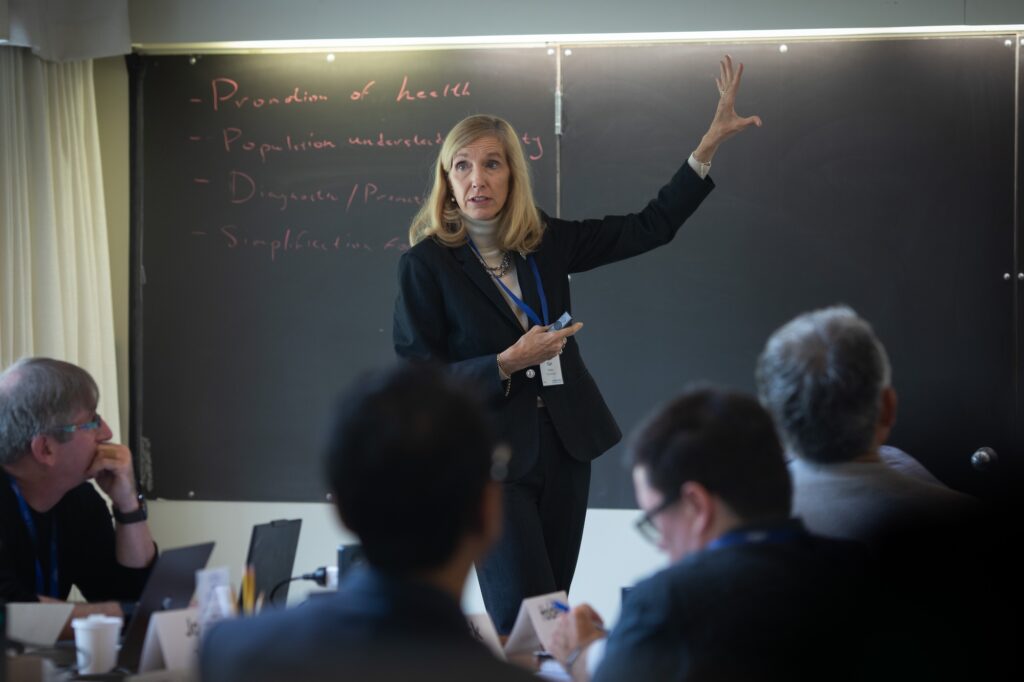
HIP Scientific Advisory Board Member Kari Nadeau, MD, PhD, FAAAAI at HIP’s Banbury Meeting, November 2025.
Fast Forward to Now: Building Immune Intelligence
In 2026, our momentum continues to build around our core hypothesis: that immune variation between people is large, structured, and largely non-heritable; that each person sits at characteristic states; and that such states predict how they respond when perturbed or stressed. These observations have now been replicated across multiple cohorts and perturbations including vaccines, and blood-based metrics can track disease activity, aging, and vaccine response across a range of conditions.
HIP today is structured as a nonprofit Focused Research Organization building the scientific and computational foundation needed to understand immune health at unprecedented scale. HIP will study immune systems across a globally representative sample of humanity, including populations in low- and middle-income countries that have historically been underrepresented in immunological research. HIP will generate comparable data through shared cohorts, standardized assays, and common AI infrastructure. The goal is to uncover the rules of immune response and make immunity understandable, predictable, and eventually engineerable.